Step 1. Preparation
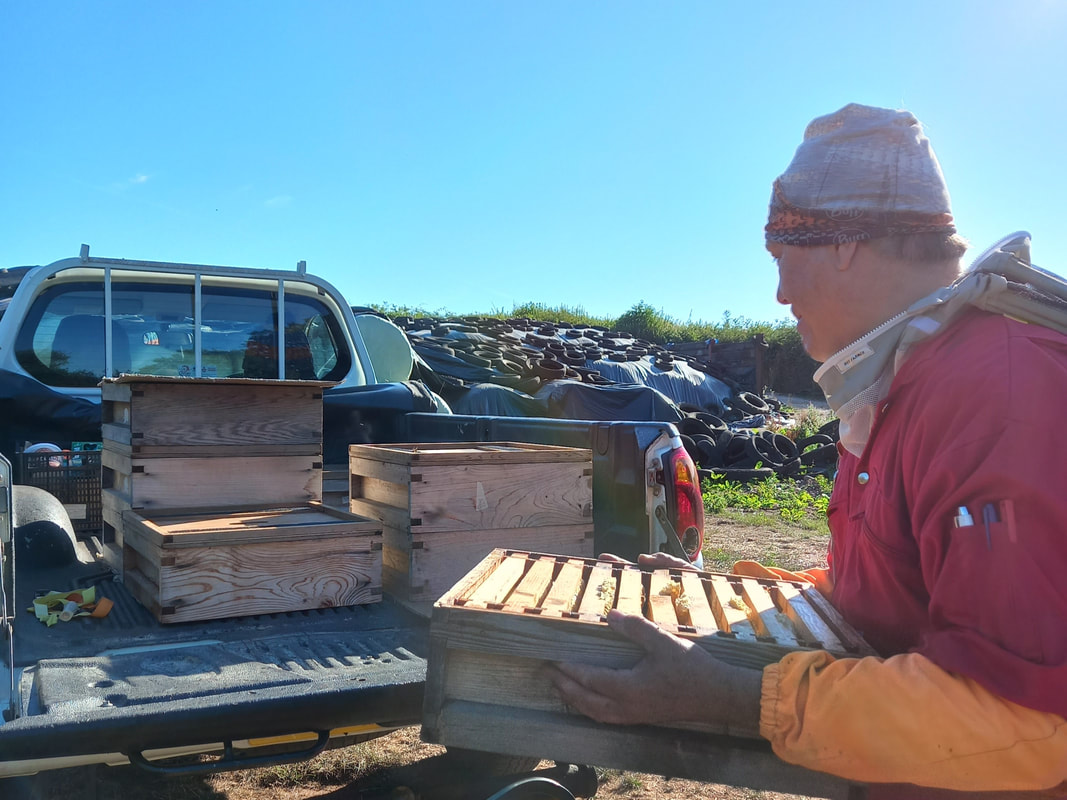
HarvestEach apiary is harvested separately with every super identified by apiary and hive.
|
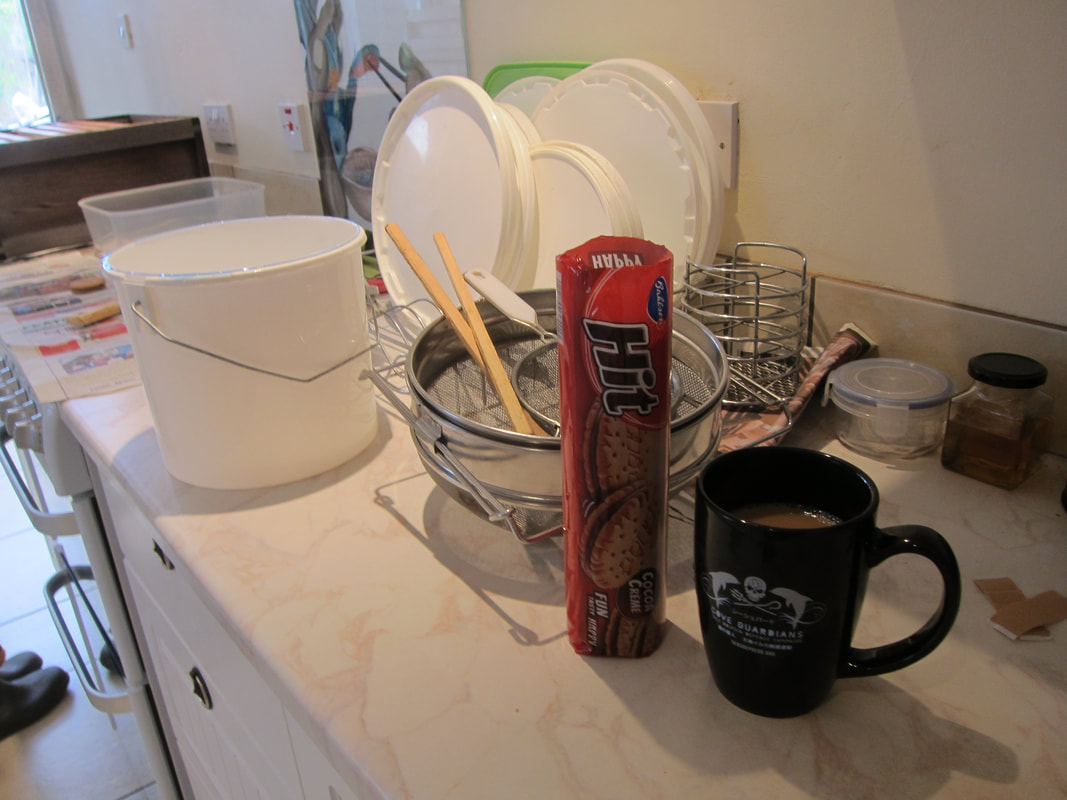
Essential suppliesContainers, strainers, refreshments, and first aid, all on hand.
|
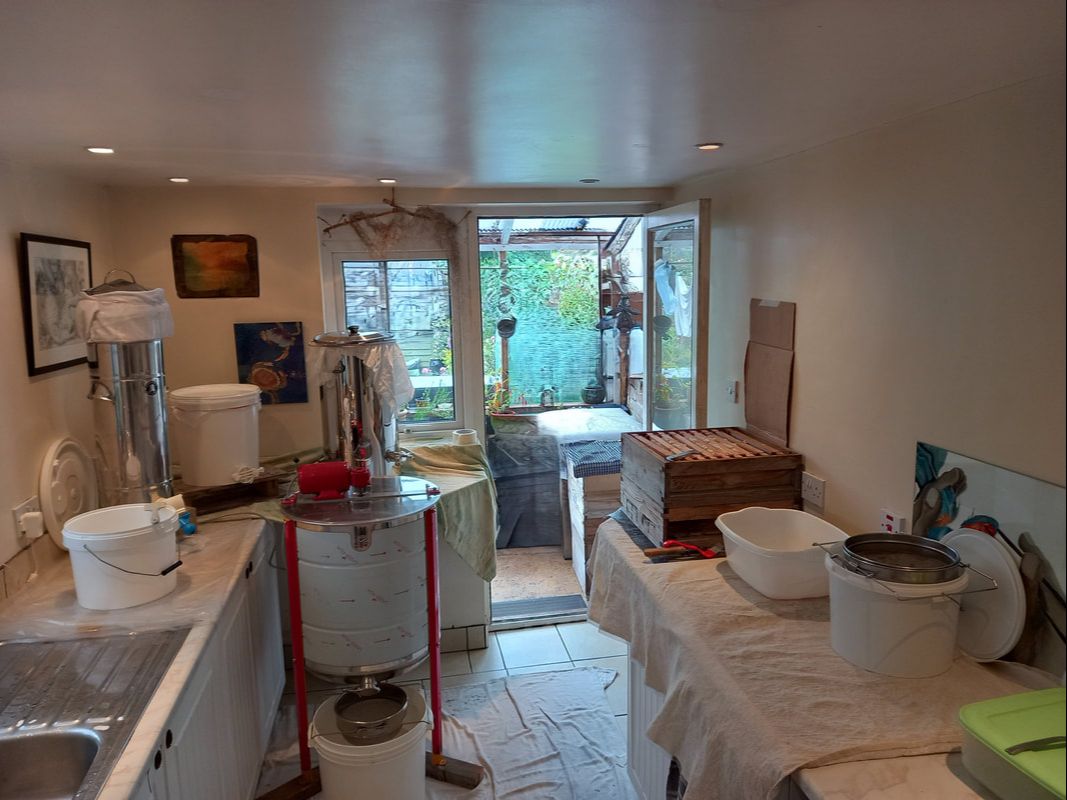
Equipment setupCleanliness is essential. Everywhere is steam cleaned, sanitised, and surfaces covered to contain the inevitable stickiness.
|
Step 2. Extraction process
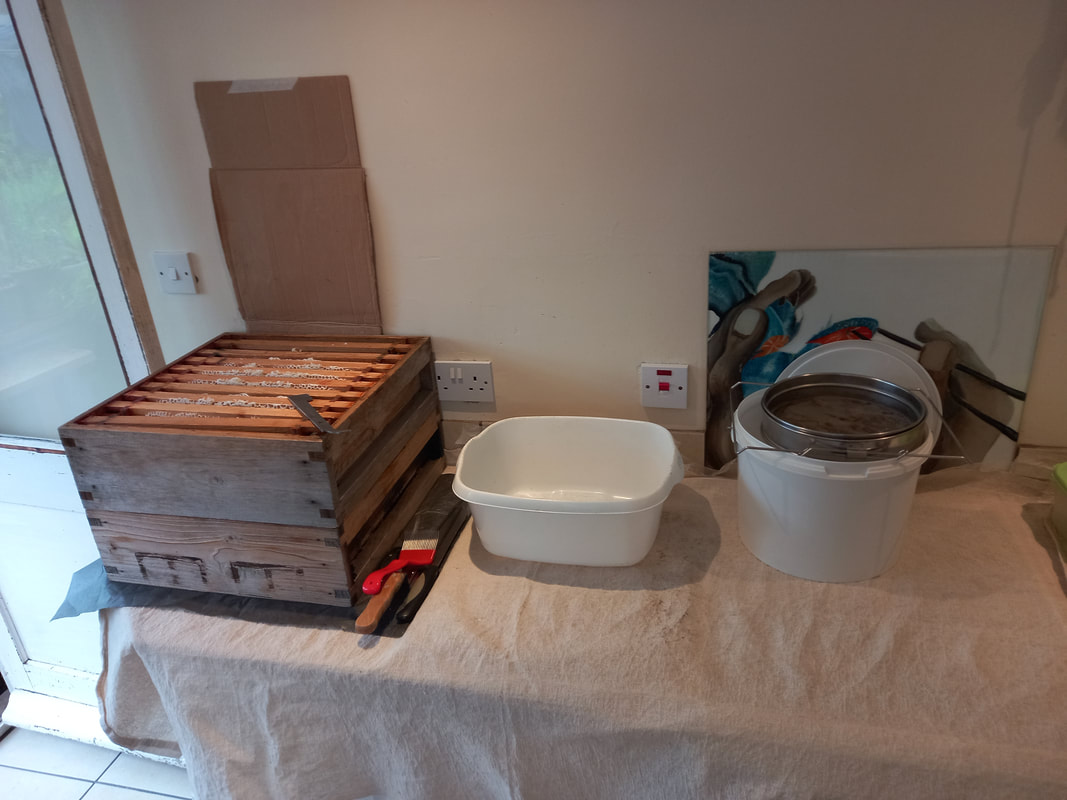
Sort frames and uncapFrames are sorted by weight, cappings are removed, and the prepared frame is put into the extractor. All cappings drain into a single bucket. Each hive's harvest is extracted separately as far as possible.
|
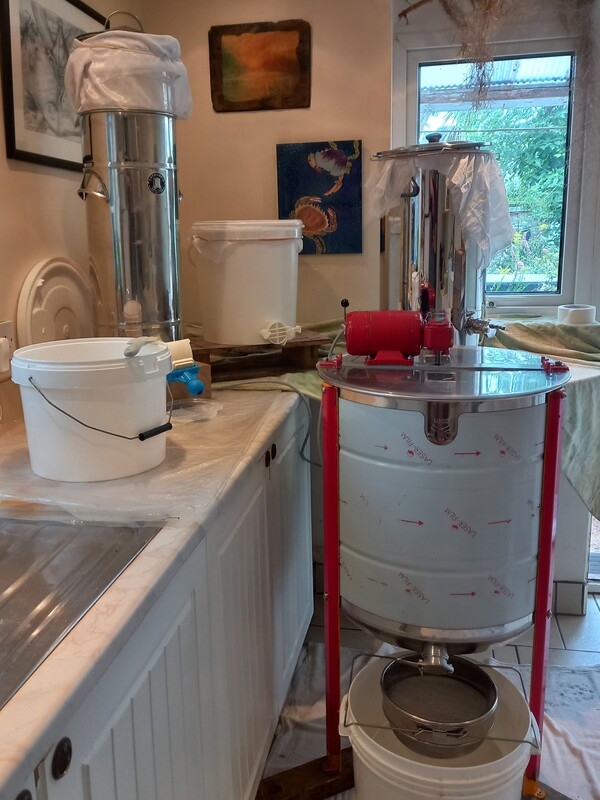
Extract areaA 9-frame motorised extractor takes the strain out of spinning heavy frames. a super contains 10-frames so it's an ideal size to to do individual supers.
|
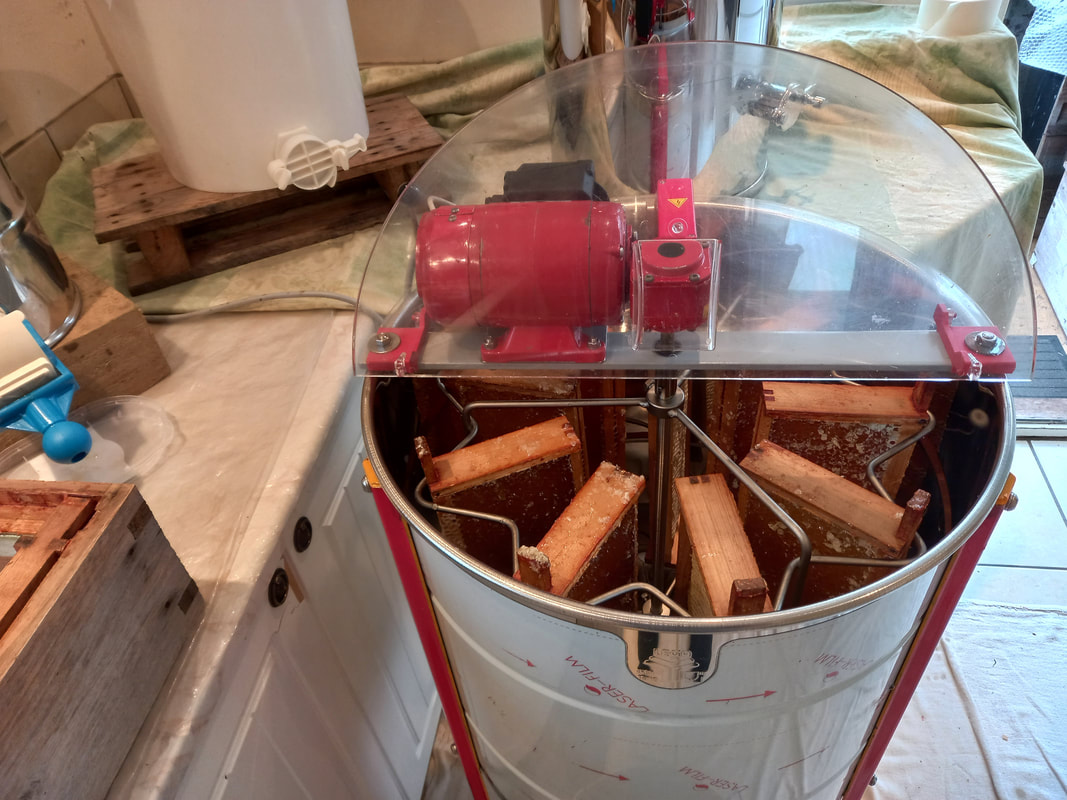
ExtractFrames are spun just fast enough to expel the honey by centrifugal force. Too slow and it won't budge. Too fast and the delicate honeycomb structure fractures.
|
Step 3. Storage
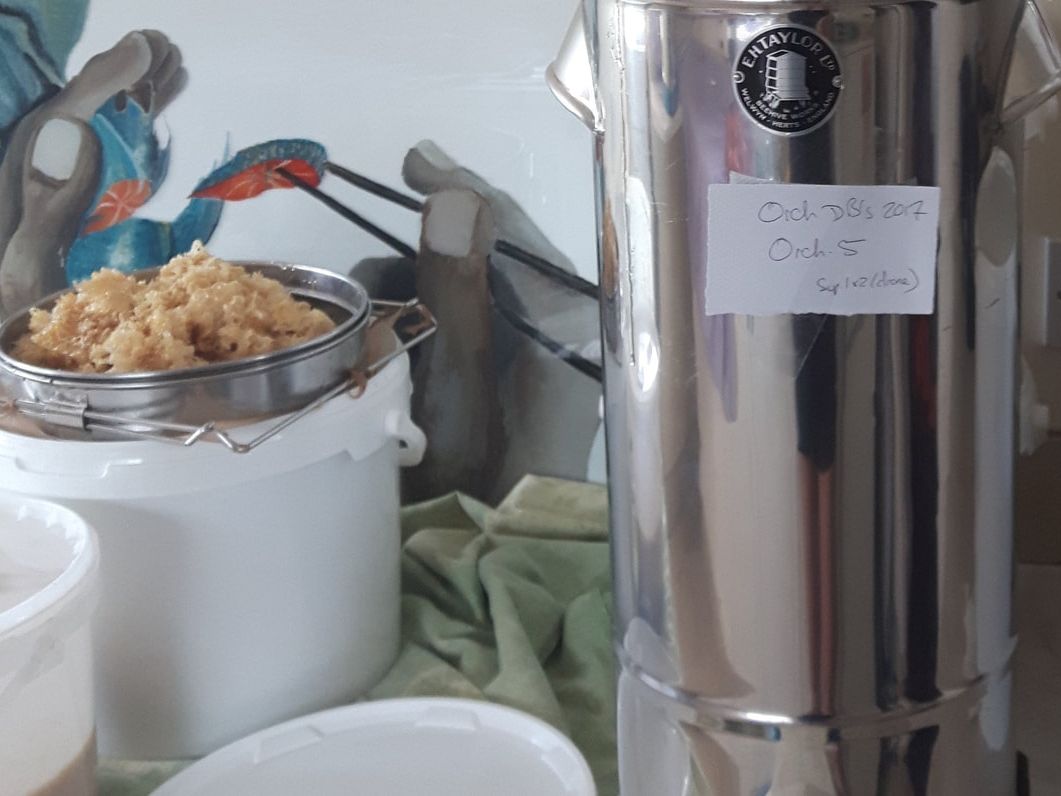
Into settling tankExtracted honey is strained into a bucket then decanted into a settling tank before jarring. Cappings are strained through a coarse sieve and sold as a special product.
|
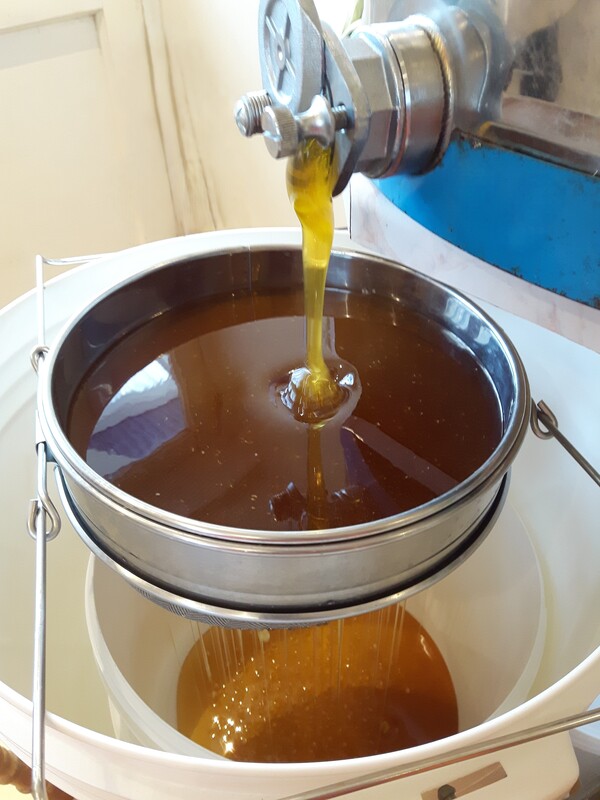
Into buckets for storageExtracted honey passes through a double strainer to remove particles of wax and other bits and pieces from the extracting process.
|
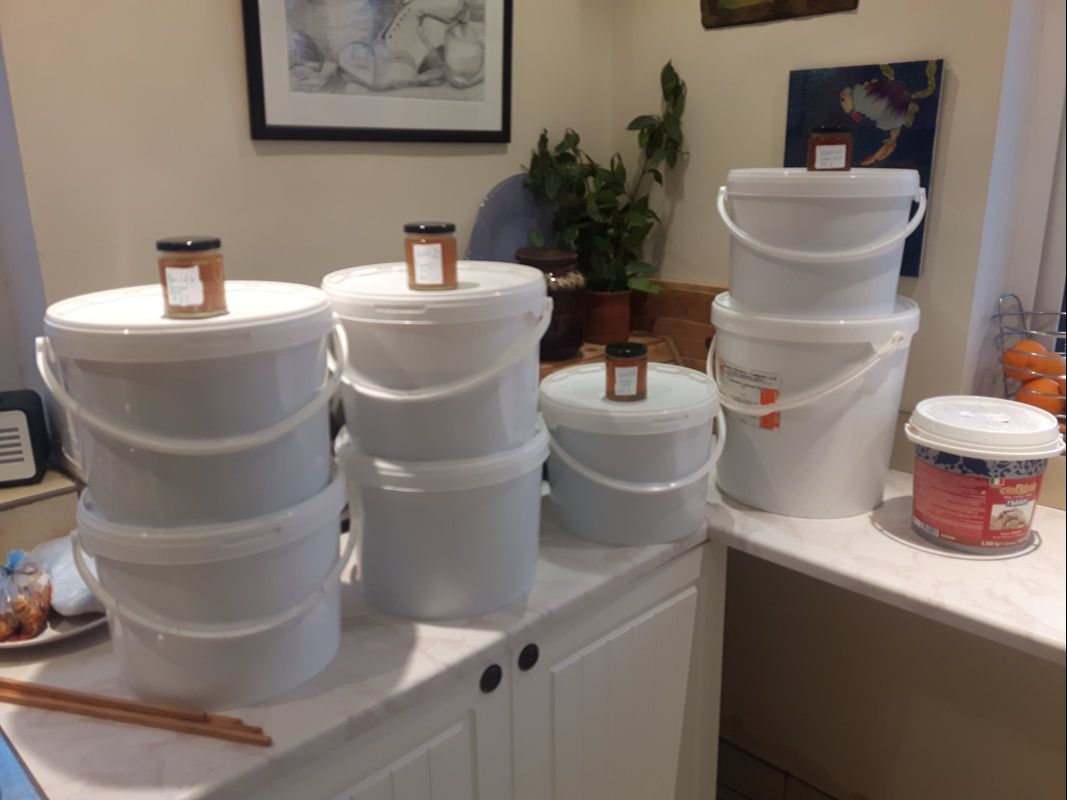
Long term storageStored honey is identified by season, apiary, and hive which then follows through onto the label. Water content is noted as part of the quality monitoring process.
|
Honey from minimal processing for maximum goodness
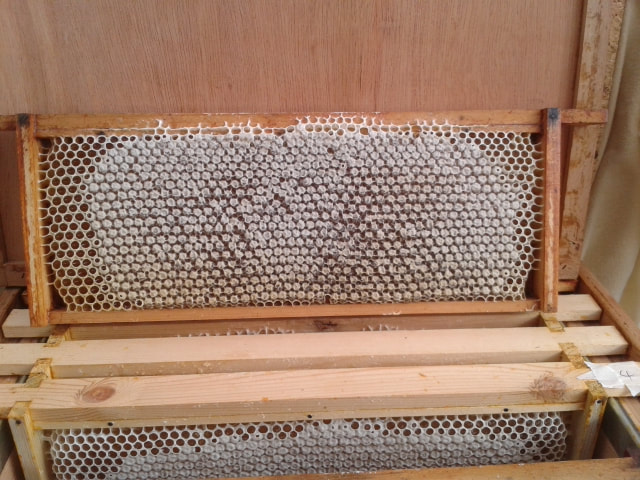
Comb honeyWhole frames are set aside for those that prefer their honey direct from the hive without any processing. Some like to have whole frames, some prefer it cut into sections.
|
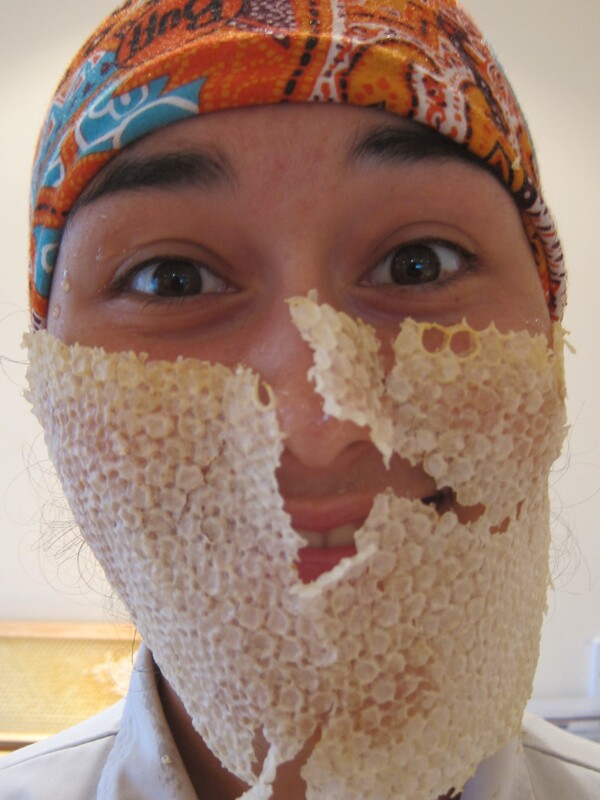
Honey cosmeticsSticky sticky sticky. Cappings face-pack is apparently very soothing.
|

LabellingHoney is identified throughout the extract and storage process, finally replicated on the label. This makes it traceable by season, location, apiary, and hive. The QR code takes you to a page which shows the originating apiary and hive.
|